Five things worth settling before you replace an HVAC system
A replacement is a fifteen year decision made in about two days. These are the parts of it people most often wish they had asked about.
September 17, 2026 · 4 min read
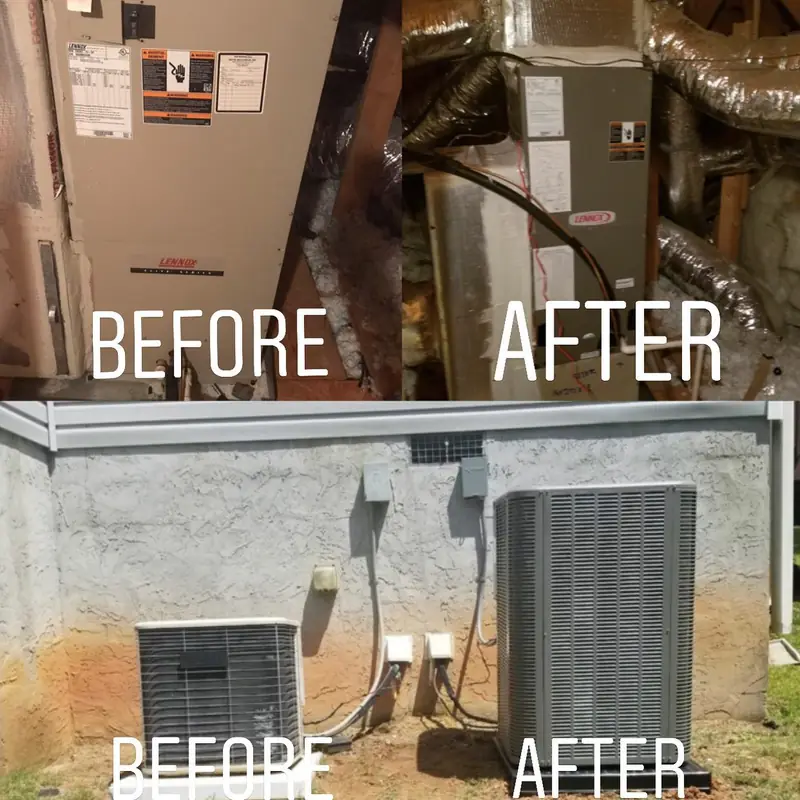
Almost nobody replaces an HVAC system on a calm Tuesday with time to research. It happens when something has already failed, usually in the worst week of the year for it to fail, and the decision gets made quickly because the house is uncomfortable. That is understandable, but a system you buy this month is one you will live with for twelve to fifteen years. Here are the five things worth slowing down for, even by an afternoon.
1. Sizing is not the same as matching what was there
The quickest way to size a replacement is to read the tonnage off the old unit and order the same again. It is also the most common way to get it wrong. The old system may have been oversized from the day it was fitted, or the house may have changed since: new windows, added insulation, a converted garage, a screened porch closed in. All of those move the number.
Oversizing is the failure people do not expect, because bigger sounds safer. An oversized air conditioner cools the air to the thermostat setpoint fast and then shuts off, which sounds efficient and is not. Removing humidity takes run time, and a system that short cycles never runs long enough to do it. The result is a house that is cold and clammy at the same time, which in a Georgia August is genuinely unpleasant. It also puts far more start and stop wear on the compressor than a correctly sized unit ever would.
2. The ductwork is part of the system
New equipment bolted onto tired ducts will underperform, and it will not be the equipment's fault. Leaking joints, crushed flex runs, and undersized returns all cap what a new system can deliver. If some rooms have never heated or cooled properly, that is usually a distribution problem rather than a capacity problem, and replacing the box outside will not fix it.
This is worth raising before the quote is written rather than after the install. Custom ductwork and duct system maintenance are part of what we do, and it is far cheaper to correct a return while the system is already apart than to come back to it later.
3. Understand what the efficiency rating is promising
Higher efficiency equipment costs more up front and pays that back in running costs over time. Whether that math works for you depends on how long you plan to be in the house, how many hours a year the system actually runs, and what you pay per kilowatt hour. In this part of Georgia the cooling season is long, so the run hours are high, which tends to favor the more efficient option more than it would further north.
What it does not do is make a badly sized or badly ducted system perform. Efficiency ratings are measured under laboratory conditions with everything else correct. Get the first two items on this list right, then spend money on the rating.
4. Read what the warranty actually covers
There are usually two warranties in play: the manufacturer's cover on the parts, and the installer's cover on the labour. A parts warranty on its own can still leave you paying for the visit, the diagnosis and the fitting. That gap is where most warranty disappointment lives.
- We carry a 10 year parts and warranty with no out of pocket costs
- New HVAC installs carry a 2 year no lemon guarantee
- As a Dave Lennox Premier Dealer we offer a 2 year no limit warranty on all Lennox products
- Ask any contractor to put the labour terms in writing, not just the parts terms
5. Decide how you are paying before you choose the system
This sounds backwards and is not. Knowing what a monthly figure looks like changes which options are genuinely on the table, and it is better to find that out before you have emotionally settled on a particular system. There are three routes available here: Service Finance from 2.99% APR with approved credit, FTL Finance from 9.99%, and Microf, which runs no credit checks at all.
It is also worth asking what you qualify for before the quote is finalized. Military and senior customers take 5% off. Healthcare workers, first responders and teachers are covered too. Comfort Club members take 10% off any service.
The short version
Get the sizing done properly, treat the ducts as part of the job, buy the efficiency rating that suits your run hours rather than the one on the poster, read the labour terms as carefully as the parts terms, and settle the payment route early. If you are anywhere in Rockdale, Newton, Henry or Dekalb County and want a second opinion on a quote you already have, call the shop. We would rather talk it through than have you find out in year three.
Comfort Central Cooling & Heating, (678) 726-6333
Call (678) 726-6333More articles
Cutting a Georgia summer power bill without buying anything
Before you spend money on efficiency, there is a list of free changes that most houses here have never had done.
What to do to your heating before the first cold night
The first genuinely cold night of the year is when most heating faults are discovered, and it is the worst possible time to discover them.