Indoor air quality is a bigger deal in a humid climate
Most indoor air complaints here trace back to moisture, and moisture is a problem your air conditioner is already half solving.
September 17, 2026 · 3 min read
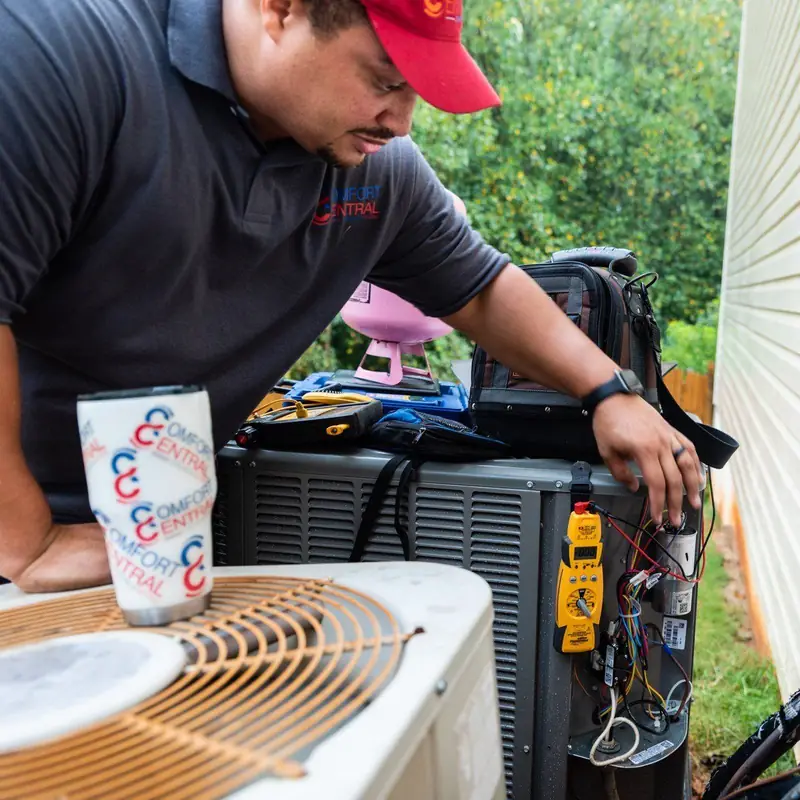
Indoor air quality gets talked about in fairly vague terms, which is a shame, because in a climate like this one it is a specific and fairly mechanical problem. The two things driving it here are moisture and a long pollen season, and both interact directly with the heating and cooling system you already own.
Start with humidity, because most things follow from it
An air conditioner does two jobs at once. It lowers air temperature, and it removes moisture, because moisture condenses on the cold evaporator coil and drains away. The second job only happens while the system is actually running, which is why the sizing question in our replacement article matters here too. A system that cools the air quickly and shuts off has not run long enough to dehumidify, and the house ends up cool and damp.
Air that sits persistently above roughly sixty percent relative humidity is where the familiar problems start: a musty smell that never quite clears, condensation on windows and vents, and conditions that suit dust mites and mould growth. Below about thirty percent, usually in winter with the heat running, you get the opposite set: dry throats, static, cracking timber and split furniture joints.
- Humidifiers, for the dry end of the range in winter
- Air exchangers, to bring in fresh air without simply opening a window to the heat
- Correctly sized cooling equipment, so run times are long enough to actually dehumidify
- Bathroom and kitchen extractors, used every time rather than occasionally
Then the particles
Pollen season here is long and heavy, and a house is not sealed against it. Pollen, dust and pet dander come in through doors, through leaks, and on people, and then they get circulated by the same system that heats and cools. That circulation is an opportunity as much as a problem, because everything the system moves passes through the filter.
This is where the standard filter gets misunderstood. The filter in most systems is there primarily to protect the equipment from dust, not to clean the air you breathe. It is doing an equipment protection job that also happens to catch some particulate. An air cleaner is a different device with a different purpose, and the two are not interchangeable.
It is also worth saying plainly that a higher rated filter is not automatically better. A filter that is too restrictive for the system chokes airflow, and restricted airflow causes its own faults at both ends of the year. The right filter is the highest rating your particular system can move air through properly, which is a question about your equipment rather than a general rule.
UV, and what it is and is not for
UV lights and UV air scrubbers work on biological growth rather than on particles. The evaporator coil and drain pan sit wet for months at a time during a long cooling season, which makes them a reasonable place for biological growth to establish. Keeping that under control is a real benefit, and it is also why UV is fitted where it is rather than in the living space.
What UV does not do is filter dust or pollen. If your complaint is visible dust and sneezing, filtration is your answer. If it is a musty smell that returns every cooling season, the coil and the drain are the place to look.
And the ducts themselves
Ducts collect what passes through them over the years. We are NADCA certified for duct cleaning, which matters because this is a part of the trade where a thorough job and a cursory one look identical from the hallway afterwards.
Our process runs a three stage HEPA vacuum, a power whip agitator run the full length of every duct rather than as far as a hand held tool reaches, registers removed and cleaned and reinstalled, sanitization, and a new one inch filter fitted at the end. There is a before and after walkthrough so you see what came out. Residential duct cleaning starts at $449.99 for the first system.
If something about the air in your house has been bothering you and you cannot place it, describe it to us on the phone. Musty, dusty, dry or stuffy each point somewhere different, and it is usually possible to narrow it down before anyone comes out.
Comfort Central Cooling & Heating, (678) 726-6333
Call (678) 726-6333More articles
Five things worth settling before you replace an HVAC system
A replacement is a fifteen year decision made in about two days. These are the parts of it people most often wish they had asked about.
Cutting a Georgia summer power bill without buying anything
Before you spend money on efficiency, there is a list of free changes that most houses here have never had done.