What an annual inspection actually catches
Most expensive HVAC failures were cheap problems first, and they were measurable for months before anything broke.
September 17, 2026 · 4 min read
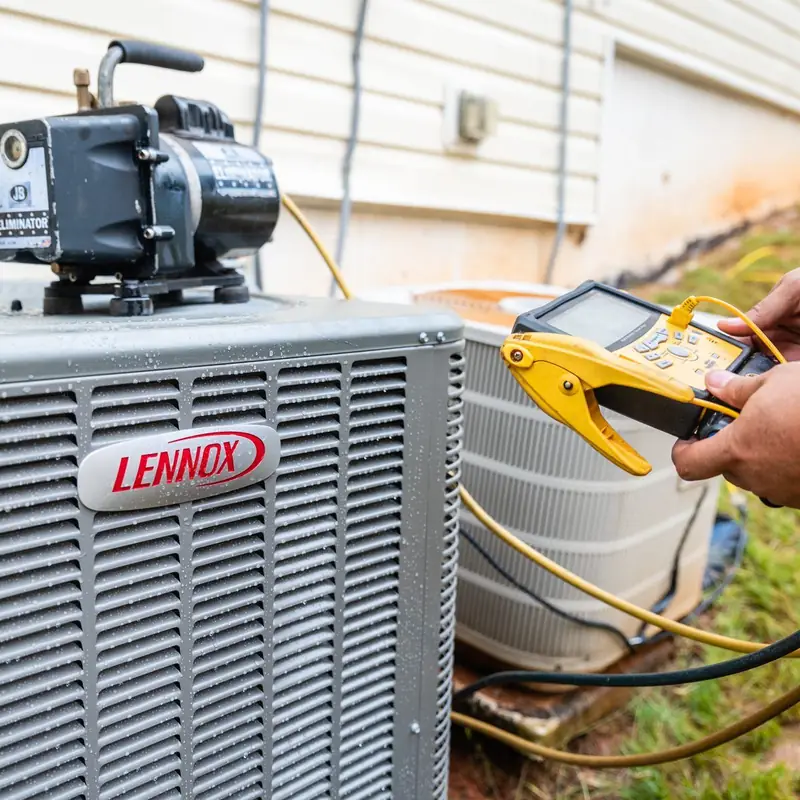
The reasonable objection to an annual inspection is that the system is working. Nothing is broken, nothing sounds wrong, and paying someone to confirm that feels like paying for nothing. The answer is that the significant faults in this trade are almost all gradual, and gradual faults are invisible from inside the house until the day they are not.
The instruments do the work
An inspection is mostly measurement. A technician is comparing what your system is actually doing against what the manufacturer says it should be doing, and the gap between those two numbers is the finding.
Amp draw is the clearest example. Every compressor has a rated load amps figure on its data plate. A compressor drawing current above that figure is working harder than it was designed to, and it will be doing that for months before it finally fails to start on a hot afternoon. You cannot hear it. The house still gets cold. But it is measurable with a clamp meter in a couple of minutes, and it is a number rather than an opinion.
- Amp draw on the compressor and blower motor against the rated figures
- Refrigerant charge, measured rather than topped up on a guess
- Capacitor values against their rated microfarads
- Temperature split across the evaporator coil
- Contactor and wiring condition inside the electrical panel
- Condensate drain flow, before it backs up
Why the small things turn into large things
A capacitor is one of the least expensive parts in the system. Its job is to give the compressor the push it needs to start, and it degrades gradually rather than failing outright. A weakening capacitor makes the compressor strain on every single start.
Left alone, that strain is doing damage to the most expensive component in the whole system. Replacing a failing capacitor is a small job. Replacing a compressor that a failing capacitor destroyed is a different conversation entirely, and it is often the point at which replacing the whole outdoor unit starts to make more sense than repairing it.
The same logic applies to refrigerant. A system low on refrigerant has a leak, because refrigerant is not consumed. Running it low means the compressor runs hotter and longer for less cooling. Simply adding more without finding the leak is treating the symptom and paying for it again next year.
Condensate is the other gradual one. An air conditioner running through a Georgia summer pulls a surprising volume of water out of the air, and all of it has to leave through a drain line. That line runs slowly furred up with biological growth over a season or two, and when it finally blocks, the water backs up. Depending on where the air handler sits, that is either a float switch shutting the system down on the hottest day of the year, or it is water finding its way into a ceiling. Clearing a drain takes minutes. The ceiling does not.
The safety half of it
On the heating side, the inspection is partly a safety check. A cracked heat exchanger, a poor flue draft or incorrect gas pressure are not things a homeowner can assess, and they are not things that announce themselves. These are the checks that justify the visit on their own, separately from any question of efficiency or running cost.
The electrical panel matters for the same reason. Contactors pit and burn over time, and connections loosen through years of heating and cooling cycles. A loose connection generates heat, and heat is how a nuisance becomes a hazard.
None of this is exotic. It is the ordinary wear of a machine that runs several thousand hours a year in heat and humidity, mounted outdoors, and it behaves exactly the way any other hard working machine does. The difference is that a car tells you it is struggling and a condenser sitting quietly beside the house does not.
What you get out of it
Three things, realistically. A system running closer to the efficiency you are already paying for. Fewer failures, and the ones that do happen caught while they are still small. And some idea of where you stand, which matters as a system passes ten years old and the question quietly changes from whether to repair it to when to plan for replacing it.
That last one is worth having early. Planning a replacement in a mild month, with time to compare options and sort out financing, is a completely different experience from making the same decision in an emergency in August.
Our Comfort Club covers the scheduled maintenance and system checks, takes 10% off any service, and puts members at the top of the repair queue. We are NATE certified, hold Georgia license CN211300, and cover Rockdale, Newton, Henry and Dekalb Counties. If it has been more than a year since anyone put a meter on your system, that is the thing worth booking.
Comfort Central Cooling & Heating, (678) 726-6333
Call (678) 726-6333More articles
Five things worth settling before you replace an HVAC system
A replacement is a fifteen year decision made in about two days. These are the parts of it people most often wish they had asked about.
Cutting a Georgia summer power bill without buying anything
Before you spend money on efficiency, there is a list of free changes that most houses here have never had done.